


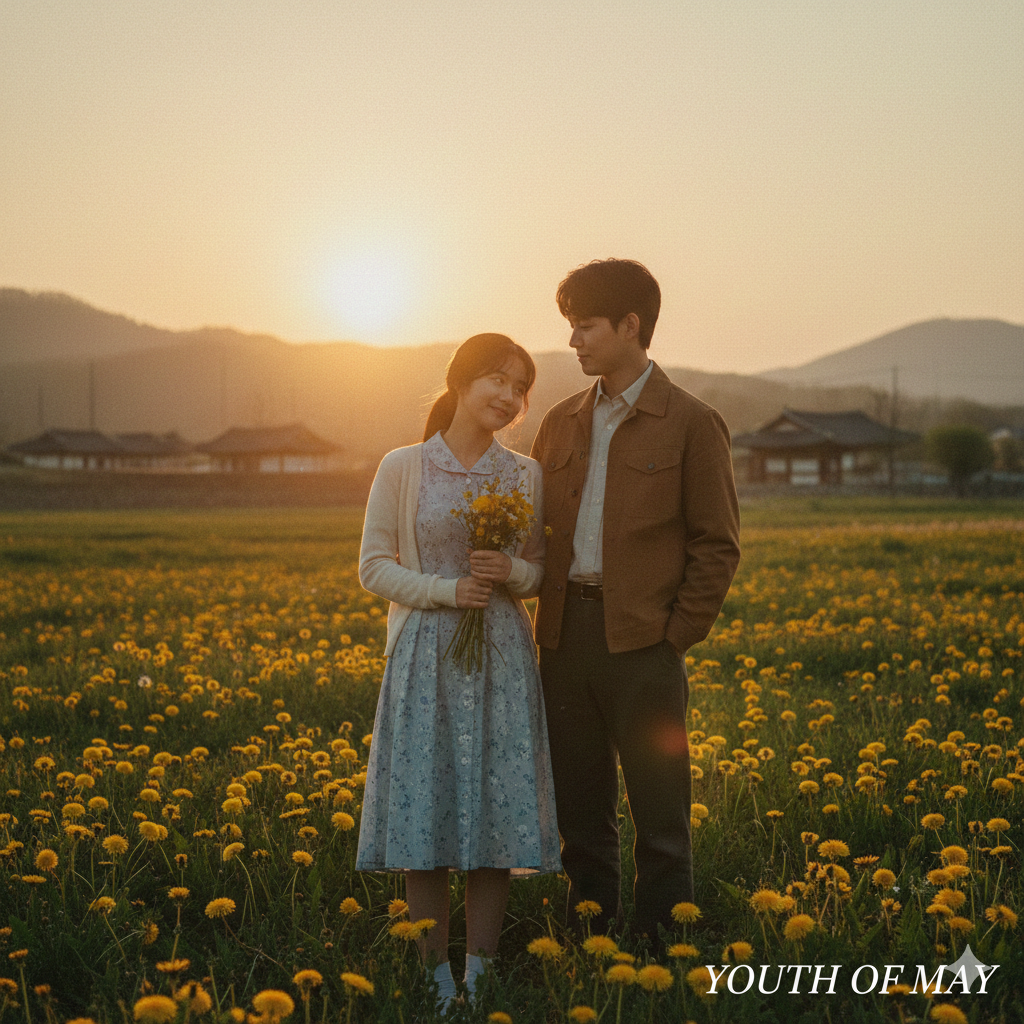
The South Korean television drama “Youth of May” blends romance and political tragedy set against the 1980 Gwangju Uprising and offers viewers a deeply emotional portrait of youth caught in the sweep of history.
The 2021 K-drama aired on KBS2 and was later distributed internationally through streaming platforms. It follows the intense love story between Hwang Hee-tae, a medical student, and Kim Myung-hee, a determined nurse, as their lives cross during the final days of South Korea’s military dictatorship. Set in May 1980, the series unfolds against the backdrop of the Gwangju Democratic Movement, when citizens rose up against authoritarian rule and were met with violent military suppression.
Unlike many historical dramas that focus on political leaders or conflicts, “Youth of May” centers its narrative on ordinary young people. Hee-tae, played by Lee Do-hyun, is portrayed as intelligent and emotionally guarded, shaped by personal loss and privilege he does not fully embrace. Myung-hee, portrayed by Go Min-si, represents resilience and quiet defiance, balancing financial hardship with an unwavering sense of moral responsibility.
Their romance begins accidentally, through a blind date arranged in place of her friend. It develops quickly, portraying the fragility of happiness during times of unrest. As political tension escalates, the couple’s personal dreams collide with a reality neither can escape.
The drama’s strength lies in its restrained storytelling. Rather than dramatizing violence for spectacle, the series presents the uprising through fragmented moments: sirens cutting through conversations, hurried goodbyes and hospital corridors filling with wounded protesters. For South Korean audiences, the Gwangju Uprising remains a sensitive and defining historical event. International viewers unfamiliar with the uprising have also responded strongly to the series, noting that the drama portrays not only love but also introduces Korean history. “Youth of May” joins a growing body of cultural works that seek to humanize the tragedy rather than reduce it to dates and figures.
While romantic melodrama is a familiar genre in Korean television, “Youth of May” distinguishes itself by refusing easy resolution. The ending, in which Myung-hee dies, shows how harsh and unforgiving life was during that time. Although it is very sad, the story does not offer a happy or idealized ending. Instead, it remains realistic and makes the historical setting feel more powerful and emotional.
