


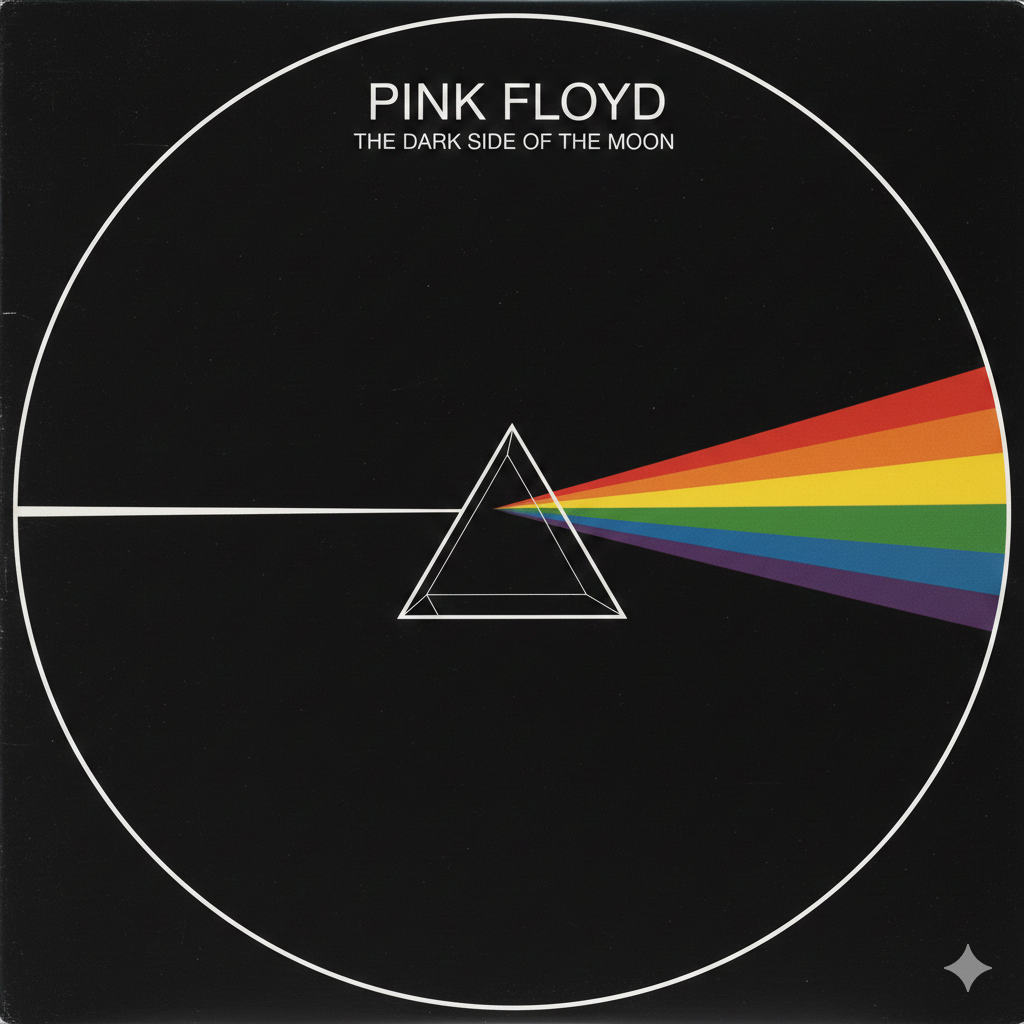
I listen to a lot of classic rock music because of the influence of my brothers and father. One of the albums I enjoy is “The Dark Side of the Moon,” released in 1973. The album contains themes of time and aging, money and greed, mental strain, conflict and war, and its primary focus: life and death.
A progressive rock staple, the album was created to be heard as a continuous experience. “The Dark Side of the Moon” features 10 tracks ranging in length from one minute and 30 seconds to nearly eight minutes.
To a first-time listener, the soundscape can be jarring; songs feature loud bells, cash registers, spoken-word clips and eerie synthesizers. “Speak to Me,” the first track, is a short intro composed of sound effects and audio clips. It previews themes heard later, including heartbeats, clocks, voices and chaos.
“Breathe (In the Air),” the second track, focuses on how people are pulled into routine lives and social expectations. It encourages slowing down to experience life rather than drifting through it. “On the Run,” the third track, is fast, electronic and anxious. It represents stress, fear and the rush of modern travel.
“Time,” the fourth track, explores how life passes and how people often realize too late that they wasted their time. It serves as one of the album’s biggest wake-up calls. “The Great Gig in the Sky,” the fifth track, features a powerful vocal performance without traditional lyrics. It expresses emotion regarding death and the unknown.
“Money,” the sixth track and likely the most well-known song on the album, discusses greed and how wealth controls relationships. The sound of a cash register makes the track stand out. “Us and Them,” the seventh track, explores conflict and division among nations and classes.
“Any Colour You Like,” the eighth track, is an instrumental jam. While musically playful, the title hints at the illusion of choice. “Brain Damage,” the ninth track, examines mental instability and was partly inspired by former band member Syd Barrett.
“Eclipse,” the 10th and final track, serves as the finale. It pulls the album’s themes together — life, conflict, greed and sanity — and ends with the idea that everything is connected under a shared human experience.
